
Rhoslyn Frugtniet in Yosemite
I’d always wanted to make the journey to Yosemite; for me it felt like a right of passage for every climber. Watching “Valley Uprising” first put the Valley on my radar - the dirtbag lifestyle, endless walls and historical ascents all inspired me. It looked like the ultimate playground. However, the grand walls and slick awkward granite style were intimidating, especially for someone who is more at home redpointing limestone sport routes! Climbing 'The Quarryman' earlier this year was a hugely positive experience; I thoroughly enjoyed pushing my comfort zone on more adventurous terrain. The combination of hard, insecure climbing in a runout position plus the logistics of a multipitch, proved to be both fun and highly rewarding. Eager for more challenges of this nature, Yosemite felt like the perfect option.

Upon arriving at Camp 4, I expected the raucous 1980s climbing scene: John Bachar campussing a ladder, constant heckling, and an abundance of lycra short-shorts. Instead, a topless teenager- complete with man-bun, glided past on an electric skateboard, whilst playing the flute. Yosemite, I quickly realized, had changed drastically since the '80s. My only hope was that the route grades and run-outs hadn't become as soft as the residents of Camp 4.
Our days in the Valley were split between three disciplines…
Multipitch Routing
The huge clean faces that line either side of the Valley were our main focus. Whilst most people know the big 3 — El Capitan, Half Dome and Washington Columnn, the Valley has a dozen other huge walls in the 350-600m height range that offer big ‘in-a-day’ challenges. Our ticklist endeavoured to tick a route on each of these walls, aiming for a level that would be challenging but achievable in a ground up, onsight style.
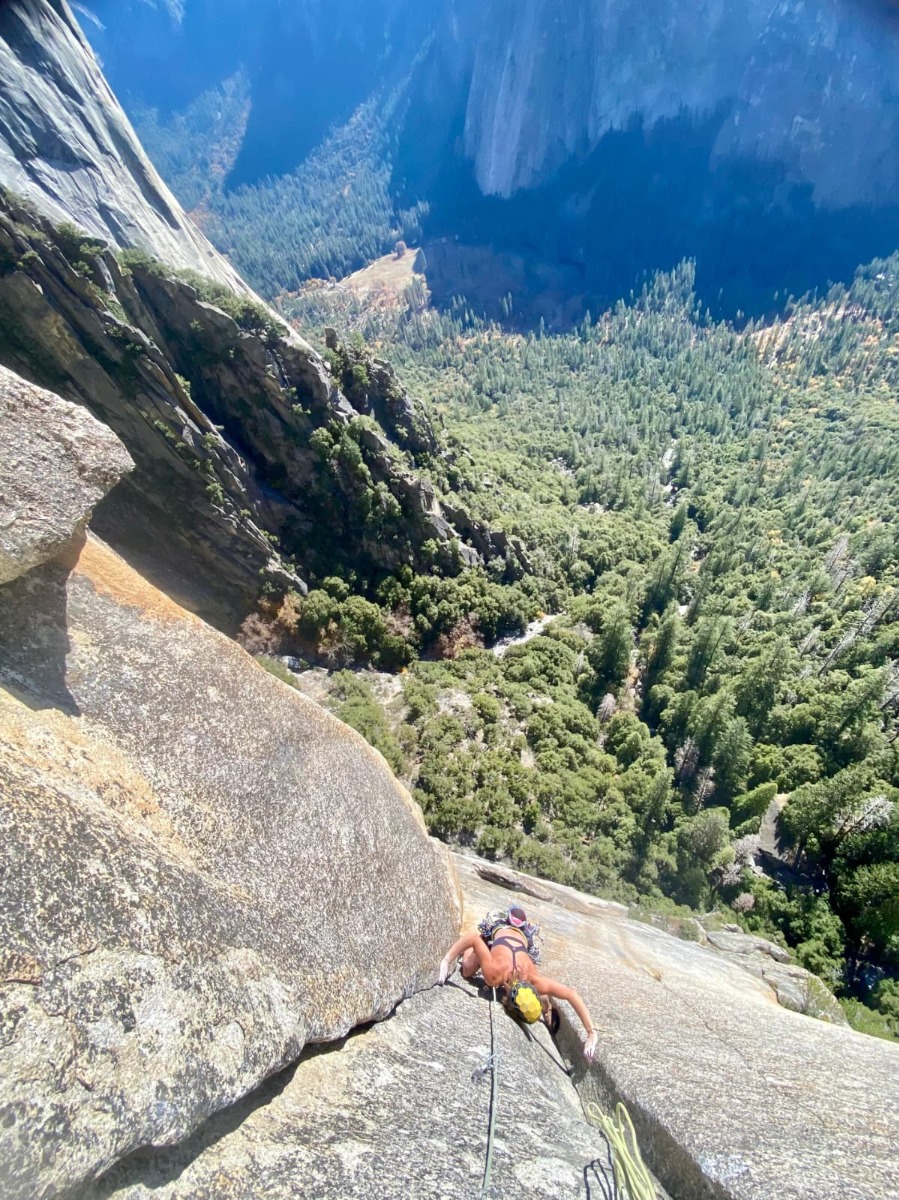
The first few days were all about building confidence: getting familiar with the style, more confident with my gear placements and slicker on belay changovers. The fatigue from hauling, coiling, and pulling ropes and bags was something I definitely under-estimated; it really adds up over 12 pitches!
Our first route was the classic ‘New Diversions’, Yosemite’s first 5.11. Recommended by a friend, we knew it was a sandbag, but honestly, even with the warning it was still a shock to the system; 6c in european money, a level I would back myself to onsight 100% of the time. It felt nails- insecure and very pumpy. The route has an amusing history: it was originally graded 5.11a, but was downgraded to 5.10d after a woman repeated it because, apparently, girls “couldn’t climb 5.11 in the Valley”. After she repeated a second 5.11 in the Valley, the grade went back up. I’ve never personally experienced sexism in climbing, but it just shows how different the culture was back then. The first and last pitches were pure crack climbing — not a crimp in sight - so it was a true baptism of fire! The middle pitches include off-width chimneys plus even more cracks! On our ascent, Tom made me lead the off-widths because he was too scared, which felt like poetic justice to the history of the route, haha!
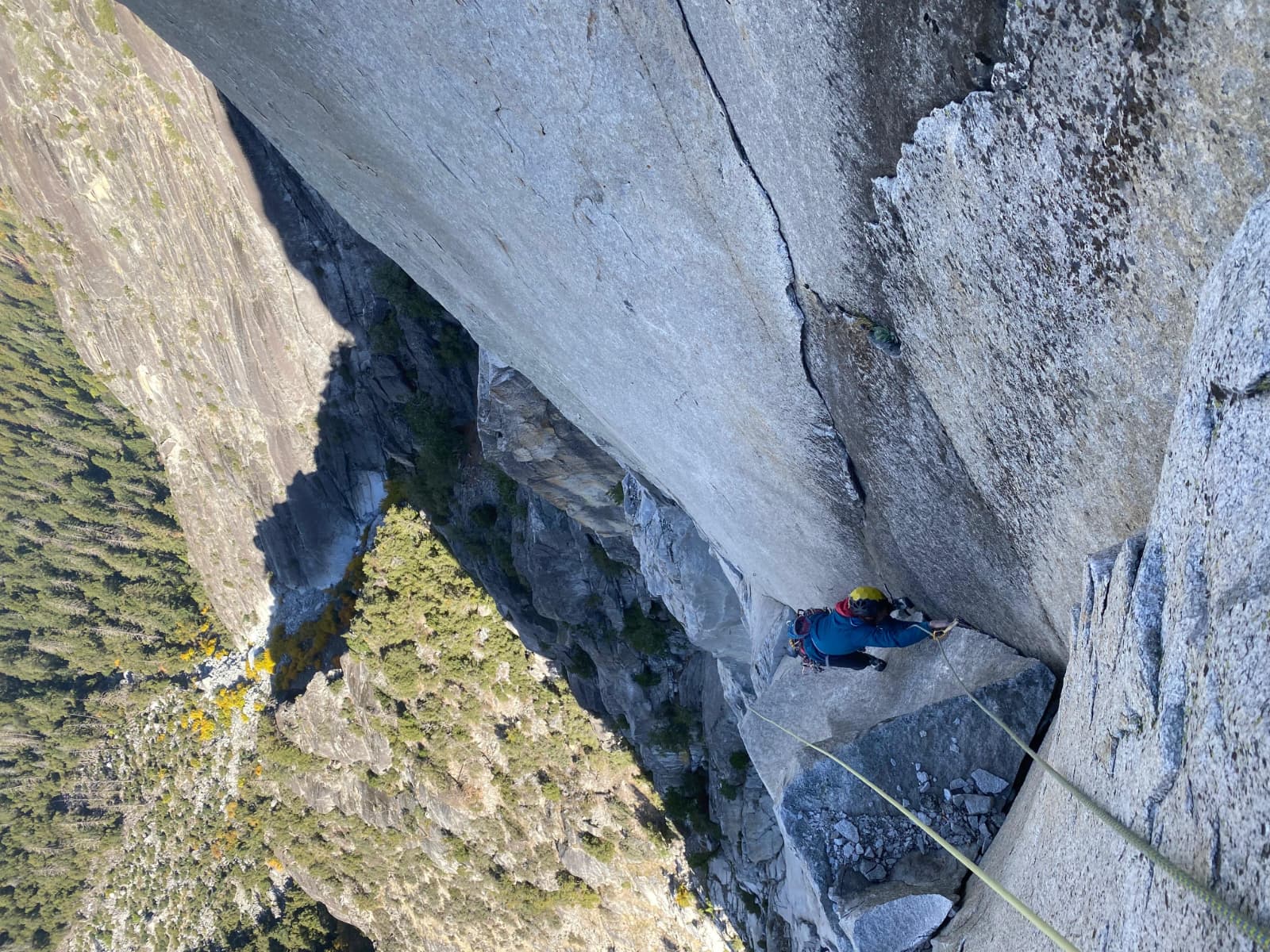
Other highlights included the 560m-long ‘Border Country’ (5.12c), which was easily the most amount of climbing I’ve completed in a single day. Another biggie: ‘Wayward Son’ (5.12c), a superb hybrid offering sustained, technical face climbing. The hardest route we tackled was ‘Westie Face’ (5.13a), a stacked route in both quality and difficulty, with only one pitch below 5.12. Put up by fellow Brit, Leo Houlding, this free version of the famous aid route ‘West Face’ is supposedly North America's steepest big wall; so sore feet were replaced by screaming forearms on this one. The final route of our trip was ‘Golden Corners’ (5.12d), a new school route and my personal favourite. Honestly, climbing doesn’t get much better than this: thin technical face climbing on perfect rock between steep finger cracks, leading to roof boulder problems and 40m endurance laybacks up ‘golden corners’.
Whilst we didn't attempt a full free route up El Cap, it was nice to climb the classic 5.11c ‘Freeblast’ the first third of several other free routes, to get an idea and whet the appetite for bigger things on future trips.
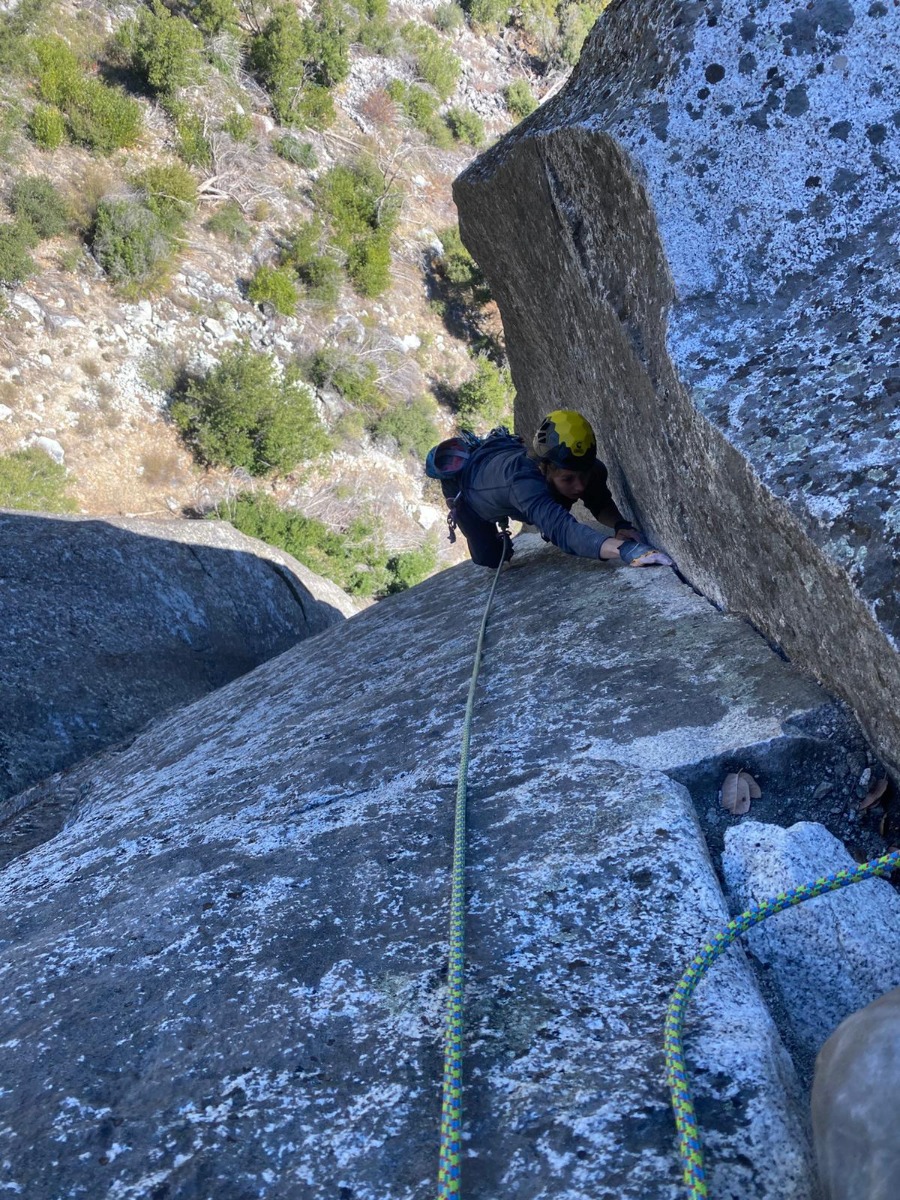
The new modern routes offered a safe mix of bolted cruxes and easier trad sections, with easier pitches being all trad—ideal as I started the trip lacking confidence on lead. Over the month though, my crack technique, gear placement, and anchor-building rapidly improved, making me much more comfortable leading those insecure granite lines by the end.
Single Pitch
The big days were mentally draining, which sometimes made me more cautious and scared when climbing- especially after completing a few big routes on consecutive days. So we got into a routine of ‘treating’ ourselves to a session of sport climbing or bouldering days- with this style being mentally and logistically much easier — no hour-long approaches with heavy packs, and you could even enjoy a proper bagel without it getting deconstructed in the haul bag whilst dragging it up.
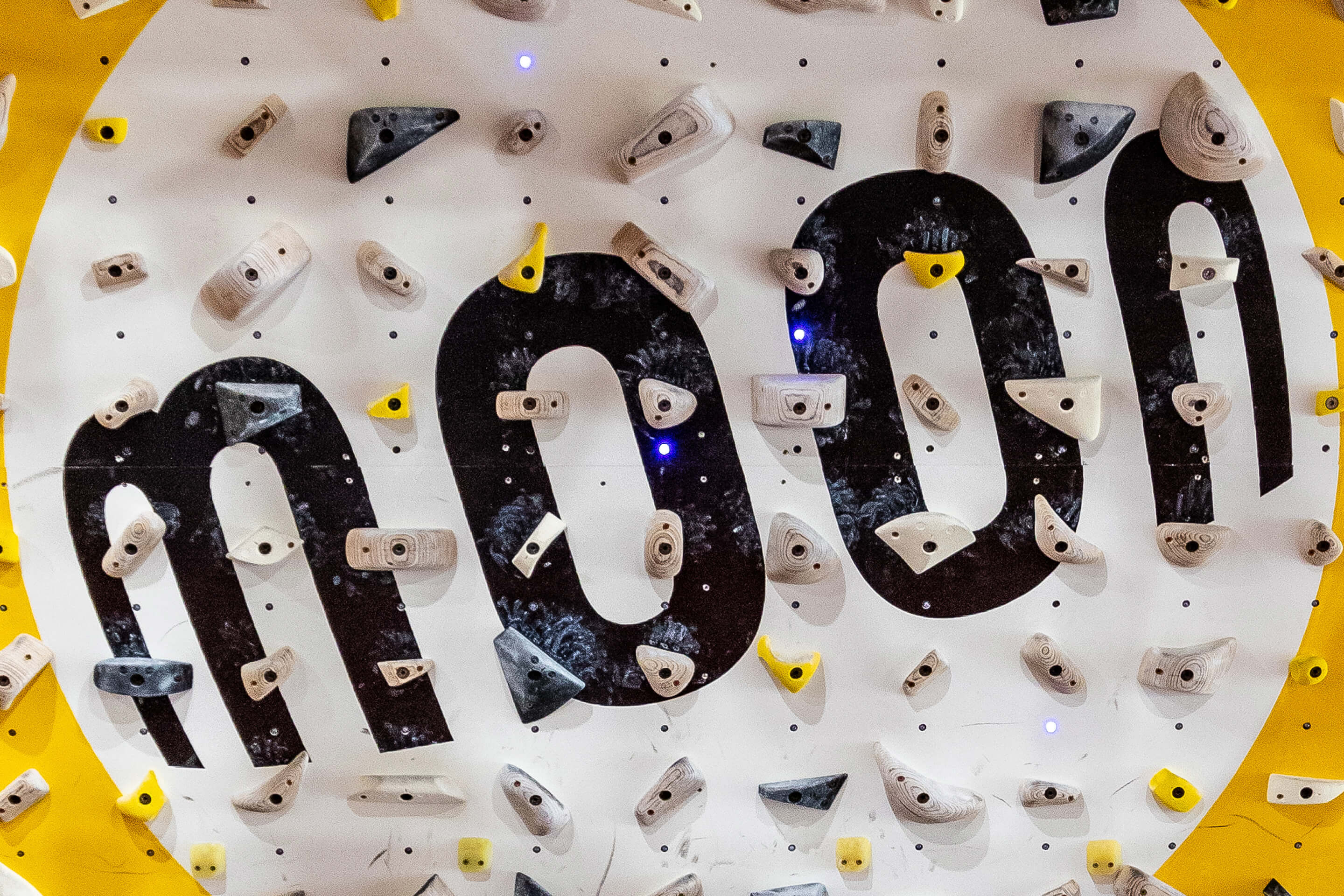
While Yosemite is famous for its traditional climbs, sport routes have slowly carved out their own niche. Bolts are still rare, mainly as they have to be hand drilled, unless you want a trip to Yosemite Jail. So they are still usually reserved for blank faces on modern testpieces where natural protection just isn’t possible. Some highlights for me were ‘Final Cut’, a steep 5.12b, and ‘Loose the Muscle, Loose the Fat’ (5.13b) at Knobby Wall, which is essentially an 11m Moonboard — this also happened to be my 100th 8a, a mini milestone I had been working towards this year. Having this variety of styles and disciplines in such a compact area is what makes Yosemite so incredible: you’re not limited to just one type of climbing.
Unfortunately, early in the trip I managed to injure a knuckle, likely from some poor crack-climbing technique; it got so sore and swollen that I couldn’t even wear a crack glove. Fortunately, the variety of climbing in the Valley prevented this from ending my trip totally- it just necessitated Tom taking the lead on the more 'crack-esque' pitches. I could still follow, but I had to resort to laybacking, which complicated leading and placing gear- but did ensure a constant pump! This system worked well as I could usually repay Tom by leading off-width, finger cracks or face pitches.
I was particularly disappointed not to complete 'The Phoenix', a steep 30m hand crack. It was easily one of the best pitches I tried on the trip, and it would have been a nice historic tick, being the Valley and World's first 5.13. To compensate, we climbed ‘Fish Crack’ - the Valley's first 5.12. Though easier, this still tricky finger crack was a revelation, I discovered a real enjoyment for finger cracks. I have since been told they are similar to face climbing, hence explaining my comfort- unfortunately not just a natural, genetic flare of mine. So if anyone has some good UK finger crack recommendations please send them my way.
Bouldering
During our first week, we took full advantage of the jet lag, hitting the boulders early to enjoy the cooler morning conditions. I quickly managed to send ‘Midnight Lightning,’ a classic problem I’d always dreamed of doing. It might seem a little ridiculous to get that hyped over a tiny patch of rock in a valley filled with towering granite, but there’s something about the history and iconic status of the problem that inspired me- and I was buzzing when I sent it our first morning. The best(?) part: Camp 4 has a picnic table about 12 feet in front of the boulder - to allow for comfortable and convenient spectating — basically Yosemite’s very own climbing Netflix Series.
I remember reading an article about Jerry’s visit to the Valley, his intention was big-wall-climbing, but he quickly became engrossed in bouldering, spending nearly the entire visit focused on this instead! I could totally relate, I had to exercise a lot of restraint to not get carried away here, but it was nice to have a few mornings sampling the classics of the area.
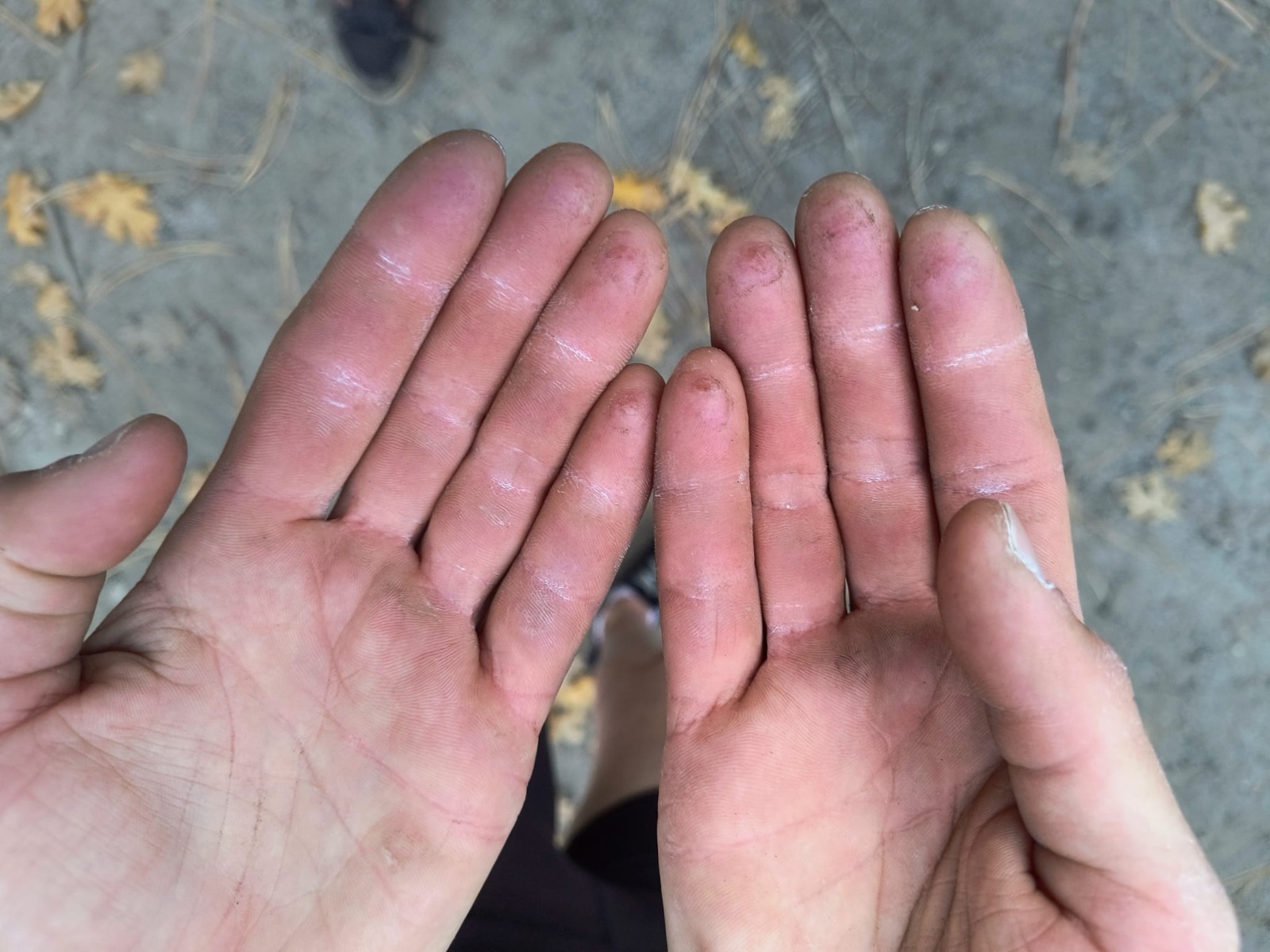
The sharp Yosemite granite is unforgiving- the sharp edges (combined with unseasonably high temperatures), meant my skin was shredded after only a few attempts each session. Also, be prepared for polished footholds on the well-known problems—though, to be honest, Raven Tor might still take the crown for this!

Rest days and reflections
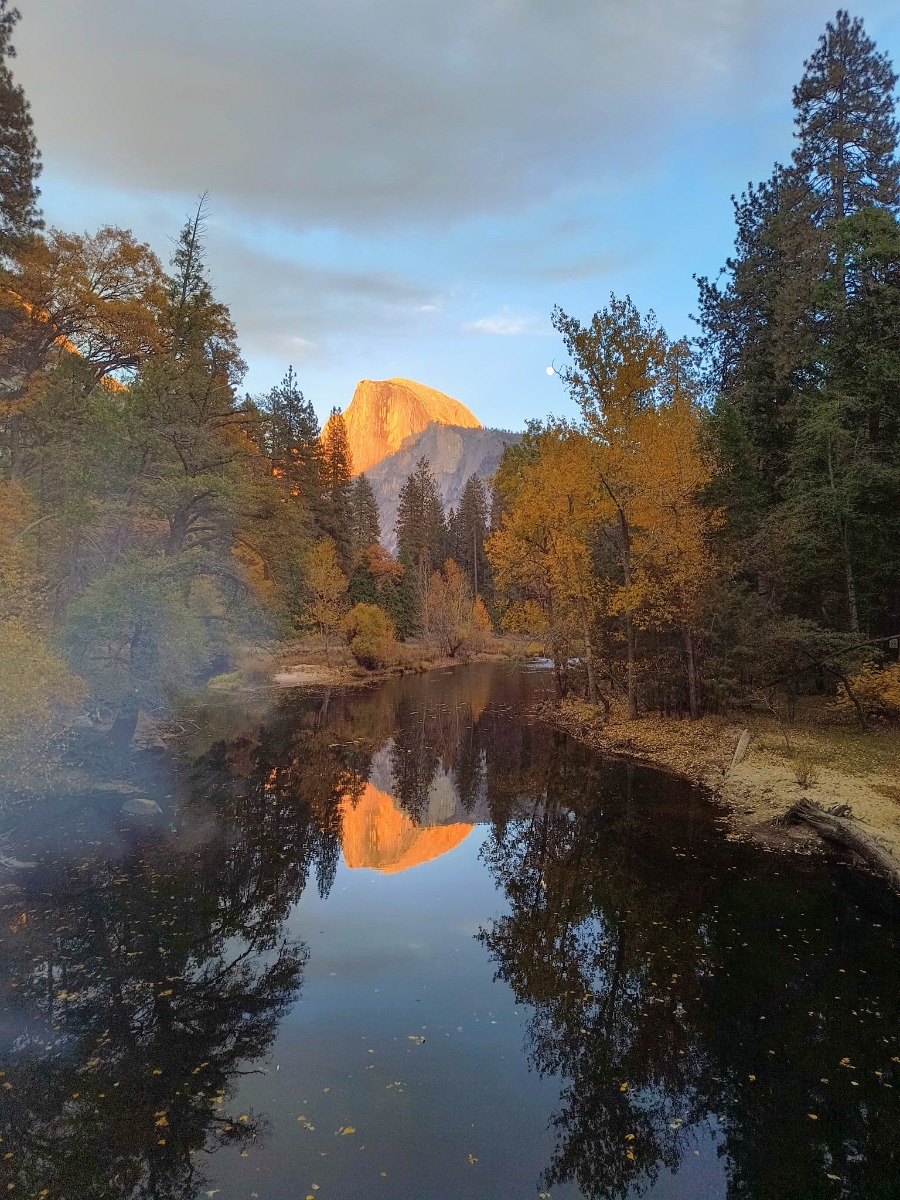
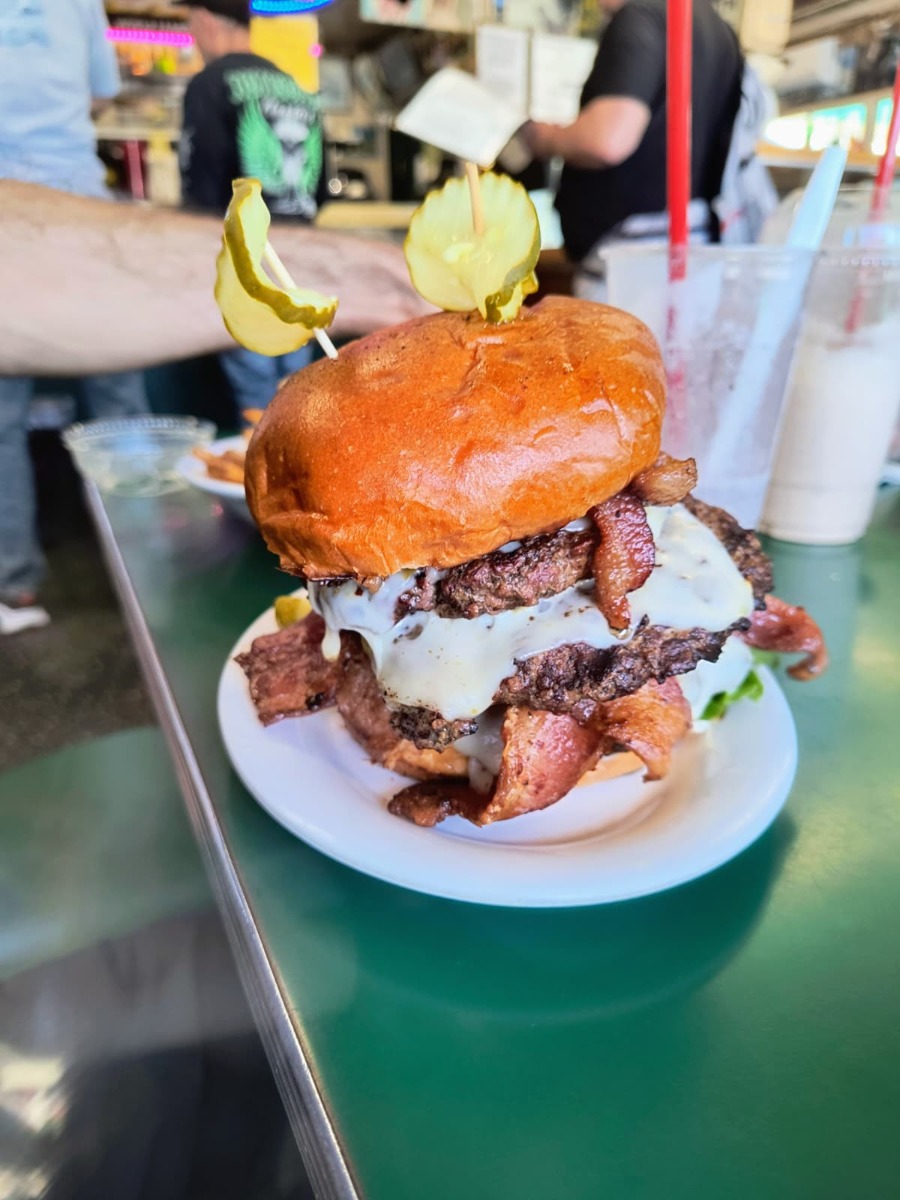
Rest days in Yosemite were a welcome relief after a steady diet of 12- to 15-hour days, 1- hour walk-ins and single protein bars for lunch. My original plan was to tick off some of the Valley's classic walks and viewpoints, but honestly, I was absolutely knackered. The intensity of big-wall climbing had left both my body and mind exhausted. So instead, I sought out the best swim spots and most calorific burgers and shakes America had to offer- a trip to ‘The Happy Diner’ in Mariposa is a must for every Yosemite climber!
This trip stands out as a personal favorite for me. It allowed for a unique and enjoyable experience, shifting significantly from my usual focus on sport redpointing or bouldering. What made it so refreshing was a combination of factors: the liberating absence of (self-imposed) "performance" pressure— I wasn't striving for a specific grade or result. This allowed me to relax into the process and appreciate the experience for its own sake, climbing just for the love of climbing.
Yosemite truly challenged me, and I welcomed the attention, physicality and focus this style of climbing demanded. Every day I was learning and absorbing new movements, techniques or mental strategies, that I feel I really grew as a climber. This was something I hadn't experienced in a long time, and it connected to me why I love the sport so much in the first place.
These differences weren't wholly what made the trip so memorable- the immersive experience of the Valley itself, the vast views, the ease of life and the rich climbing history were also great- though I was thankful to not spend another night camping in the rather rowdy Camp 4 after a whole month.