
Ayesha Khan in Squamish
To speak of Squamish, or Sḵwx̱wú7mesh (pronounced Sko-ko-mish) in the indigenous Coast Salish language, is to speak of a magic that transcends its renowned climbing. While the pristine granite boulders offer incredible movement and a constant test of technical skill, those who have experienced Squamish know that these formations are just one part of the profound experience. As it is my home, I find it almost impossible to do the place justice with words.
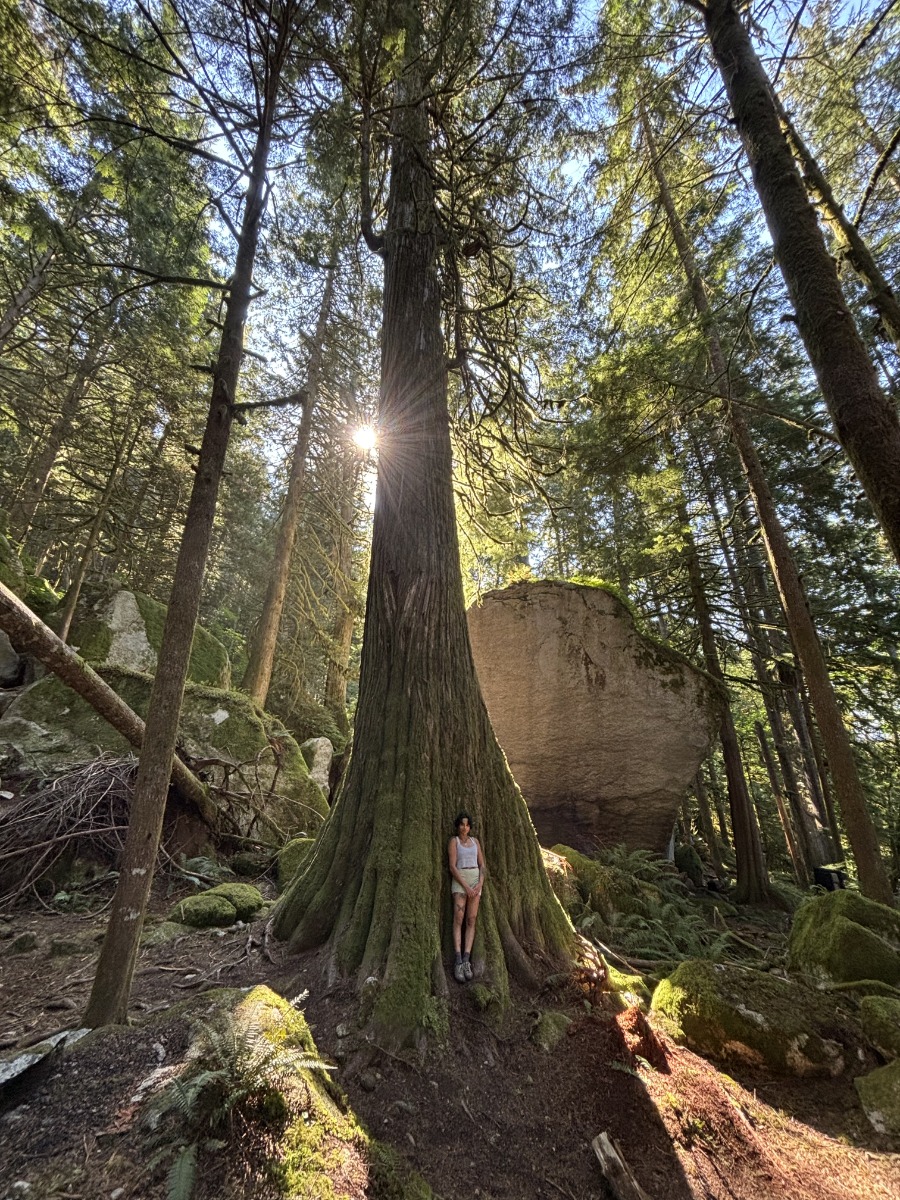
When you step into the forest, enormous cedar trees hundreds of years old towering above you, the mythology of Squamish comes to life. The trees are easily my favourite thing about the whole area. Up the paradise valley road, there is a cedar tree more than 850 years old. The age of these enormous beings leave you humbled. How can you sulk about not sending your project when you are in the presence of something which has witnessed nearly 1000 years of life, change, and development around it.
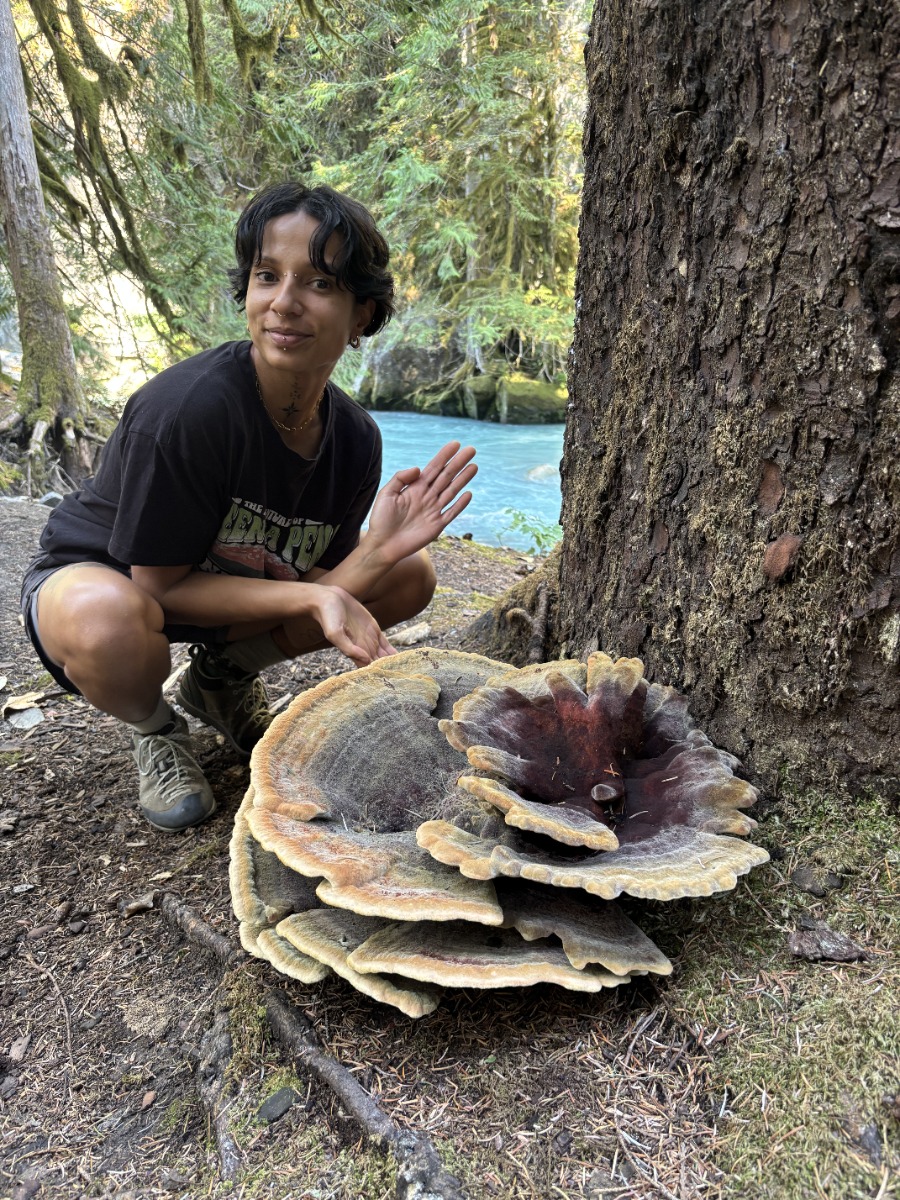
If you tear your gaze from the grandeur of the trees, and turn your attention to the earth and moss compressed beneath your feet, an endless world of smaller organisms reveals itself. The variety of fungi, especially around the fall when the heat of the summer has subsided, is something to behold. Every colour, shape and size you can imagine emerges. Vibrant caps and delicate shelves erupt from the decay, temporary fruiting bodies of the vast invisible network which lies below.
The fauna. How do you even describe a place where you frequently come across black bears while walking your dog or hiking to the boulders? If you’re lucky, you’ll even see some cubs, tumbling around like clumsy balls of fur-covered jelly while their mum looks on, exhausted and in need of a weekend at the spa and a stiff drink. The black bears are accustomed to humans, so are relatively safe to observe; however, always keep your dogs on a leash and be wary not to come between cubs and their mother. Always put your rubbish bins somewhere they can’t reach; otherwise, bears that become habituated to human food sources may unfortunately be culled for public safety.
The salmon run, which typically occurs around September, is also an incredible phenomenon to witness. The salmon swim upstream to lay their eggs and then die. It's a truly sobering event, and yet another way Squamish reminds you of our insignificance and small role in the larger cycle of life. You'll have to wait until October to see them, but then the bald eagles arrive, and they are equally magnificent.
And now, the climbing. When you land at YVR, relieved at your bouldering mats having turned up in the oversized luggage pickup, you’ll make your way through Vancouver, and up the Sea to Sky highway towards Squamish. If at all possible do this drive in the day. Having grown up in Vancouver, I’ve done this drive hundreds of times, and hand on heart I can honestly say it has never once failed to steal my breath. The glistening waters of the Howe Sound (Átl'ka7tsem, Nexwnéwu7ts, Txwnéwu7ts) on your left, and the increasingly spectacular mountains on your right come to a crescendo when you round the last corner and the Stawamus Chief appears before you. The second largest granite monolith in the world, Siám’ Smánit was said to be a longhouse transformed to stone by Xáays, the transformer. The Chief provides a playground of world class multipitch test pieces, which could keep you busy for a lifetime. If you prefer scaling slightly smaller bits of rock, the Grand Wall boulders sit below, holding the magic of their mother above, from which they fell.
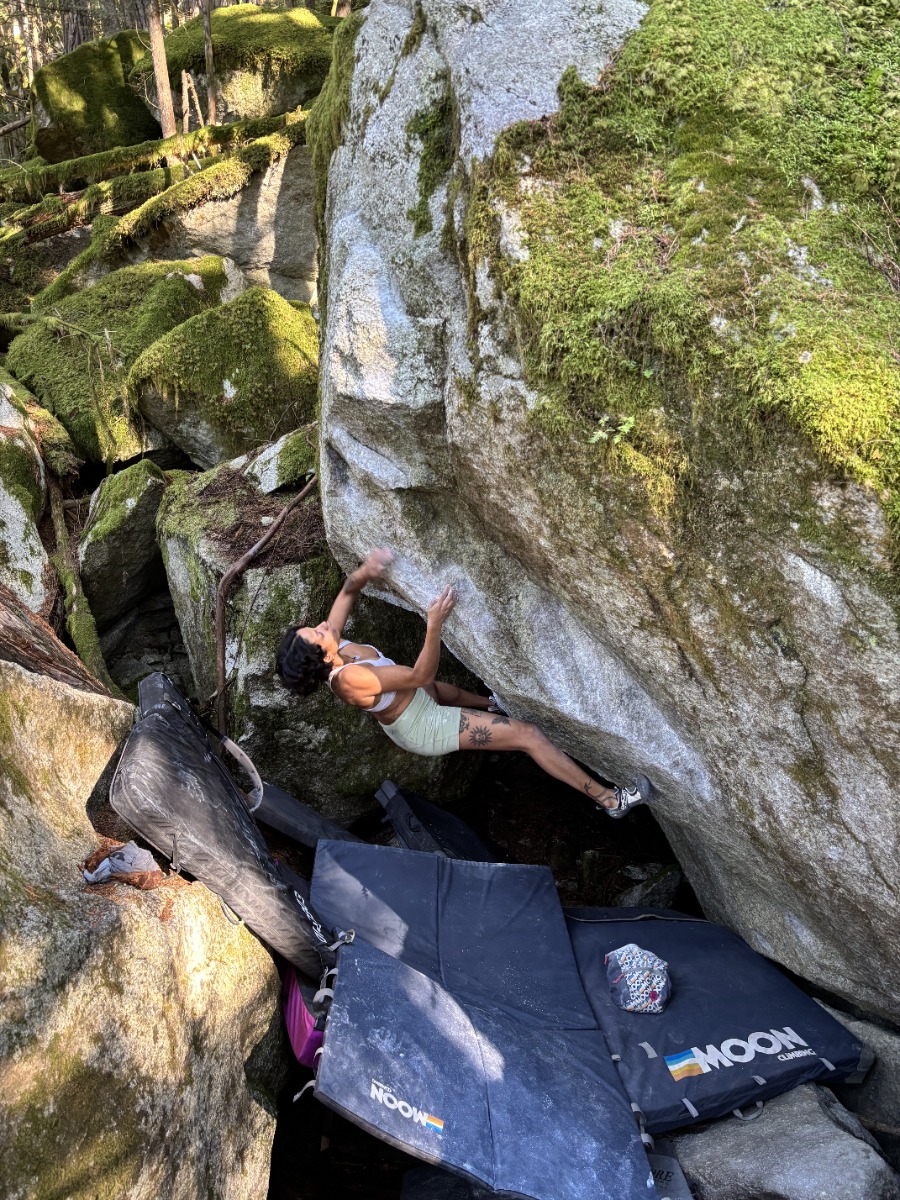
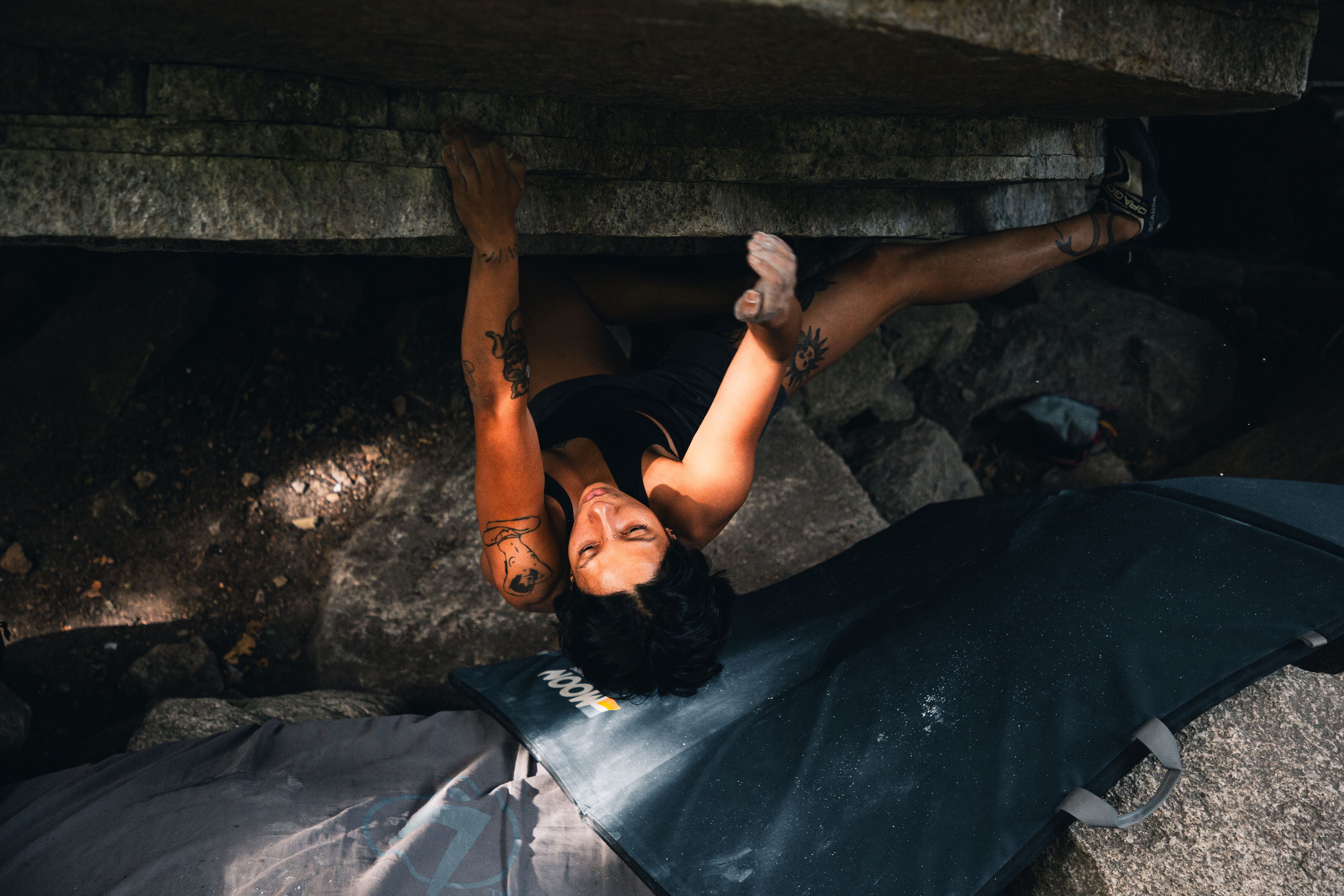
The climbing style of the Grand Wall boulders is not for those with poor footwork or large egos. If you are visiting from the land of gritstone, you’ll find a comparable grade conversion between the two rock styles, however prepare to be humbled if your home crag is more featured. Every boulder problem is an exercise in meditation, forcing you to be completely present with the positioning of every finger relative to the unique smattering of quartz in the granite, a practice known to the locals as ‘crystal whispering’.
The high concentration of boulders in one accessible area means that there is something for everyone. From fridge squeezing, to wafer thin crimps, to slabs, to high vert/off vert technical test pieces (denoted in the guidebook by an ominous ghost symbol), the boulders have an endless variety of lessons to teach to those who are patient and willing to learn.
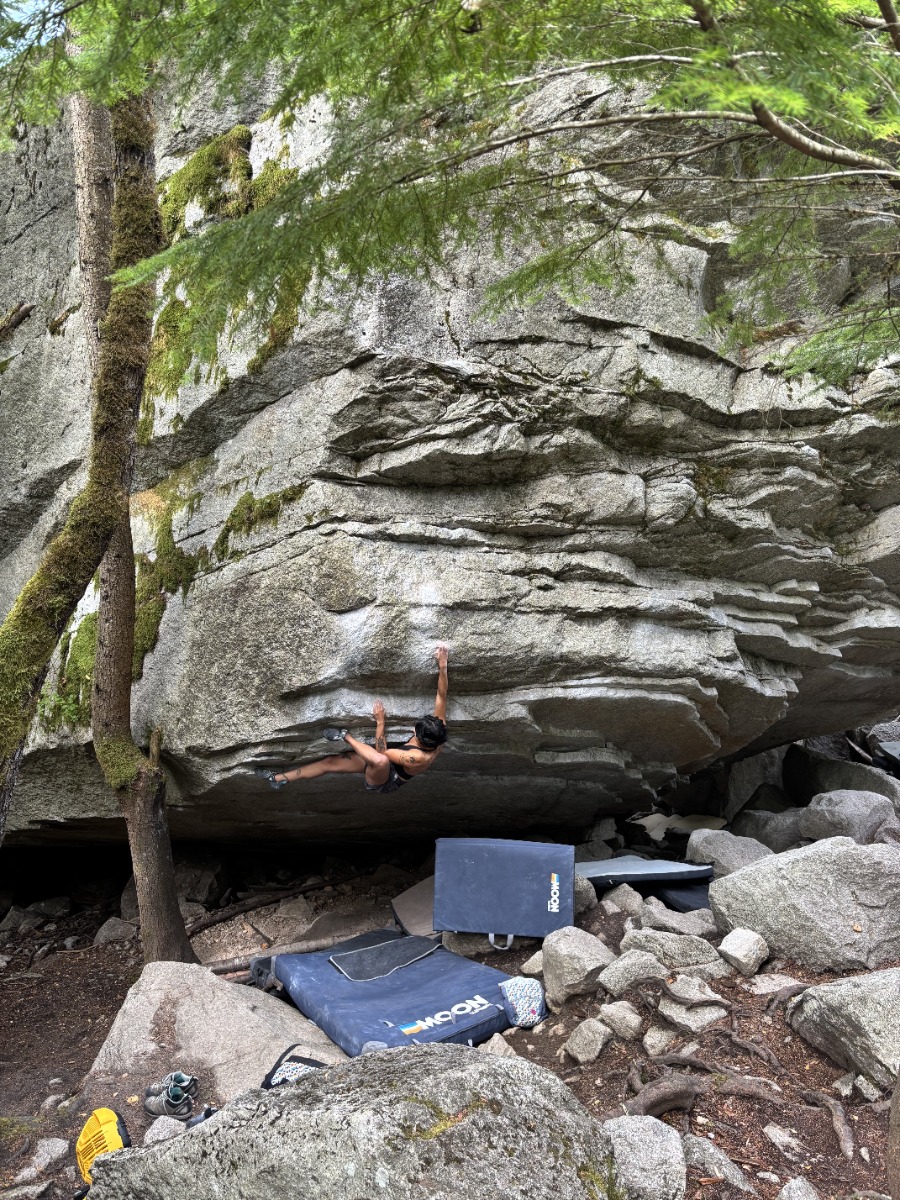
I would advise anyone visiting for the first time to build a tick list in the shape of a pyramid with a very wide base. Some of my favourite days have without a doubt been spent with friends, circuiting the classic V4s (which could easily get V7 elsewhere.)
Some of my favourite boulders in Squamish include:
- Gibbs cave V8 (and all of it’s harder extensions)
- Mantis V4
- Sesame Street V9
- Stinger Low V9/10
- Worm World Cave V9
- Chicken Lips and Assholes V6
- Houdini V9
- Pavelini V7
- Practical Horsman V4
- Tea Bag Undies V4
- Double Decker V3
- Squaminator Traverse V9
Rest days can be spent hiking, swimming in any of the stunning lakes between Squamish and Whistler, and beyond, or mountain biking (British Columbia is arguably even more renowned for its world class riding than it is for climbing.)
Please recreate responsibly and mindfully in these precious areas. I feel torn about calling somewhere home with such a terrifying history of colonisation. Squamish belongs to its indigenous people, and I constantly strive to recreate in all the spaces I occupy from a place of respect, appreciation, and awareness, rather than entitlement. Please try to leave these spaces the same, if not better than when you arrived. By doing so, you'll not only honour its profound history but also help preserve the incredible beauty and spirit that makes Squamish so truly special for everyone.